
The language of the tongue: what does your tongue say about your health?
In Traditional Chinese Medicine (TCM), the tongue is regarded as a mirror of your internal health. Even before symptoms become noticeable, subtle changes in the tongue’s colour, shape or coating can already provide clues about imbalances in Qi, blood, yin-yang balance and organ function. Tongue diagnosis is therefore one of the four classic pillars of TCM: looking, listening/smelling, asking and feeling.
This article shows what your tongue can reveal — and why TCM has been using this method in healthcare for over 2000 years.
According to TCM, the tongue is connected to all internal organs via energy channels (meridians).
- Why does TCM examine the tongue?
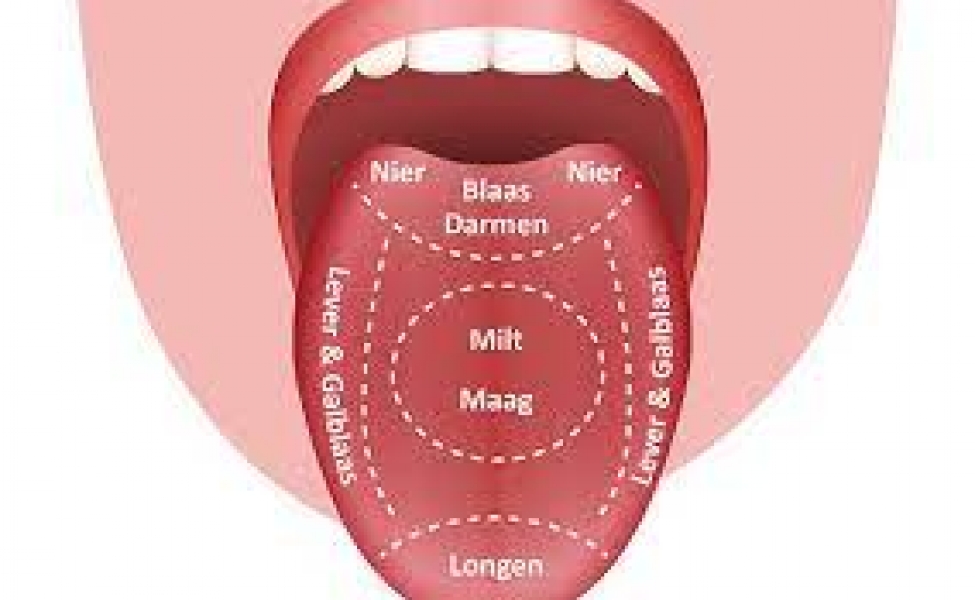
Specific areas of the tongue reflect certain organ functions: The colour of the tongue reveals a great deal about the state of your Qi, blood and body temperature.
- Tip of the tongue → Heart
- Back of the tongue → Lungs
- Sides → Liver & Gallbladder
- Centre → Stomach & Spleen
- Back of the tongue → Kidneys, bladder & intestines
- This allows a TCM practitioner to recognise patterns of imbalance through the appearance of the tongue, indicating, for example, heat, cold, stagnation, dampness, phlegm accumulation or deficiencies.
- Tongue colour: underlying energy and blood quality
Pale tongueRed tongueDeep red tonguePurple tongueSwollen tongueThin or narrow tongueTooth marks on the sidesThe tongue coating: your digestion at a glance
- Indicates Qi or Blood deficiency, or Yang deficiency
- Often linked to a feeling of cold, fatigue, poor digestion
- Indicates heat or yin deficiency
- May be associated with inflammation, restlessness or insomnia
- Severe internal heat, possibly due to stress, inflammation or yin depletion
- Sign of blood stasis or poor circulation
- Often associated with pain or chronic blockages
- The shape of the tongue: reveals something about strength and fluids
- Often a sign of fluid retention, spleen weakness or dampness accumulation
- Indicates Qi, blood or Yin deficiency
- Classic picture of spleen and digestive weakness, fluid/dampness
The coating on the tongue is a direct indicator of the functioning of the stomach and spleen, which, according to TCM, are the “source of Qi”.
Thin white coating (normal)Thick white coatingYellow coatingSticky / greasy coatingNo coatingIn TCM, the tongue often changes before symptoms arise.
- Healthy digestion
- Cold + dampness in the digestive system
- Indicates bloating, sluggish digestion, heavy legs
- Heat or inflammation in the digestive region
- Damp-phlegm accumulation, often due to diet or stress
- Yin deficiency
- May be accompanied by dry mouth, insomnia, night sweats
- The tongue as an early warning system
This is why tongue diagnosis is regarded as an early detection method for patterns such as: Modern studies support this observation. They show that tongue changes correlate with conditions such as gastritis, anaemia and diabetes
- Damp-Cold in the stomach
- Yin deficiency
- Blood stasis
- Liver-Qi stagnation
- Kidney weakness
TCM recommends examining the tongue correctly for reliable results: Tracking your tongue photo over weeks or months can reveal surprisingly much about your health progression.
- How do you examine your own tongue? (TCM-approved)
- In the morning light before eating or drinking
- Stick out your tongue relaxed, not too far
- Avoid coffee, tea or coloured foods beforehand
- Be aware of seasonal influences — summer: more vapour, winter: more fluid
A tongue can therefore reveal a great deal: However, it is not a “self-diagnosis tool”, but a powerful complement to professional TCM treatment. An experienced therapist combines tongue diagnosis with your pulse, symptoms, questioning, emotional state and lifestyle to gain a complete picture.
- What is your tongue telling you today?
- How well your digestion is working
- How you cope with stress
- Whether your “internal temperature” is too high or too low
- How well your blood circulates
- Whether your body is retaining fluid/mucus
- Whether your energy levels are up to scratch
Conclusion: the tongue speaks — if you learn to listen
The tongue tells a story. About your organs, your energy, your balance.